Monday, November 11, 2013

Azealia Banks Likens Herself To Kanye West


Throughout a later question, Azealia Banks compared herself to Kanye West. 

"Kanye is a virtuoso," Banks said in a meeting with Elle. "Kanye and I are similar to the same individual, however kid and young lady. We're pulling from the same cloud, the same enthusiasm. We're both Geminis, we're the two head avant-gardists in Hip Hop music. It's just me and him. I suppose our consciousnesses are swirling around one another in some peculiar sort of way."  

Throughout the meeting, Banks likewise spoke about living in New York. 

"I live in Washing Heights where I get a great deal of excitement for my hard earned money," Banks said. "My dollar goes far. I've got a tremendous four-pad flat for the same value that I might pay to live in a crate in Soho. I live in a truly thick Hispanic neighborhood so I can play my music boisterous since they adore their music. There's no thumping on my entryway letting me know to turn my music down."  

Past this, Azealia Banks likewise talked about her retention handle with verses. 

"It's muscle memory, when you've done something again and again and over," she said. "When I'm composing stuff that is truly quick, I'll speed the beat down to possibly 4 or 5 Bpm, rap it at an alternate pace then speed it up." 

Banks' meeting could be perused in Elle magazine's December issue, which is in stores.

Friday, November 1, 2013

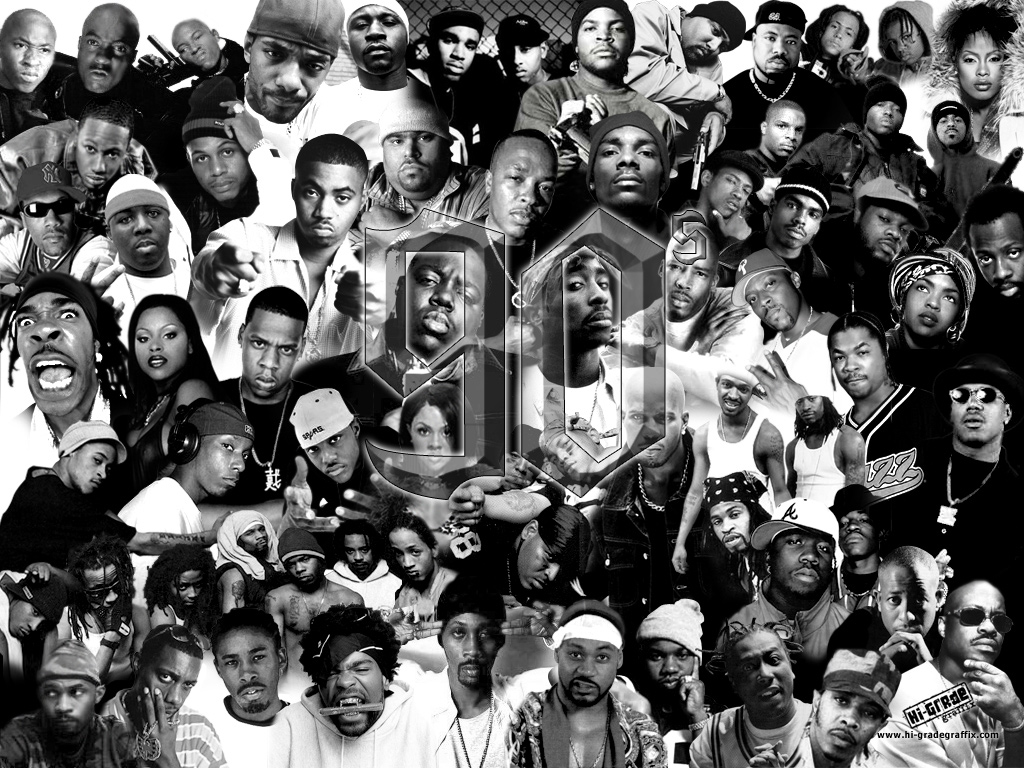
HipHop Music - 1990s


In 1990, Public Enemy's Fear of a Black Planet was a critical victory with music commentators and consumers. It was exceptionally contributory to hip jump's standard development in 1990, named by Billboard editorial manager Paul Grein as "the year that rap exploded". In a 1990 article on its business achievement, Janice C. Thompson of Time kept in touch with that hip bounce "has developed into the most energizing advancement in American popular music in more than a decade. Thompson noted the effect of Public Enemy's 1989 single "Fight the Power", rapper Tone Lōc's single Wild Thing being the top of the line single of 1989, and that around then of her article, almost a third of the tunes on the Billboard Hot 100 were hip jump songs. In a comparative 1990 article, Robert Hilburn of the Los Angeles Times put hip bounce music's business rise into view:

It was 10 years prior that the Sugarhill Gang's "Rapper's Delight" turned into the first rap single to enter the national Top 20. Who ever figured then that the music might even be around in 1990, considerably less produce attractions that might order to the extent that consideration as Public Enemy and N.w.a? "Rapper's Delight" was a variety record that was recognized by a significant part of the pop group basically as a lightweight branch of disco—and that picture stayed for a considerable length of time. Incidental records—incorporating Grandmaster Flash's "The Message" in 1982 and Run-Dmc's "It's Like That" in 1984—won discriminating support, however rap, basically, was released as a passing favor too dull, excessively one dimensional. Yet rap didn't go away, and an eruption of vigor and creative ability in the late '80s leaves rap today as apparently the most essential new road turned sound in pop since the conception of rock in the '50s.

Then again, hip bounce was still met with safety from dark radio, incorporating urban contemporary, of which Russell Simmons said in 1990, "Black radio loathed rap from the begin and there's still a great deal of imperviousness to it".

Mc Hammer hit standard victory with the multi platinum collection Please Hammer, Don't Hurt 'Em. The record arrived at #1 and the first single, "U Can't Touch This" outlined on the top ten of the announcement hot 100. Mc Hammer turned into a standout amongst the best rappers of the early nineties and one of the first family names in the kind. The collection raised rap music to another level of prominence. It was the first hip-bounce collection confirmed jewel by the Riaa for offers of in excess of ten million. It remains one of the sort's untouched smash hit albums. To date, the collection has sold the same number as 18 million units. In 1992, Dr. Dre discharged The Chronic. And serving to make West Coast gangsta rap as more financially reasonable than East Coast hip hop, this collection established a style called G Funk, which soon came to overwhelm West Coast hip bounce. The style was further advanced and promoted by Snoop Dogg's 1993 collection Doggystyle.

Hip bounce turned into a smash hit music kind in the mid-1990s and the top offering music type by 1999 with 81 million Cds sold. By the late 1990s hip jump was imaginatively ruled by the Wu-Tang Clan. The Beastie Boys proceeded their victory all around the decade intersection color lines and picking up admiration from numerous distinctive specialists.

Record names based out of Atlanta, St. Louis, and New Orleans picked up acclaim for their nearby scenes. The midwest rap scene was likewise remarkable, with the quick vocal styles from specialists, for example Bone Thugs-n-Harmony, Tech N9ne, and Twista. Toward the conclusion of the decade, hip jump was a basic part of well known music, and numerous American pop tunes had hip bo

Tuesday, October 29, 2013

HipHop Music - 1980s


The 1980s denoted the expansion of hip bounce as the kind improved more perplexing styles. Early samples of the enhancement process might be distinguished through such tracks as Grandmaster Flash's "The Adventures of Grandmaster Flash on the Wheels of Steel" (1981), a solitary comprising altogether of tested tracks and Afrika Bambaataa's "Planet Rock" (1982), which meant the combination of hip jump music with electro. Also, Rammellzee & K-Rob's "Beat Bop" (1983) was a 'moderate jam' which had a name impact with its utilization of reverb and resound as surface and energetic sound impacts. The mid-1980s was checked by the impact of rock music, with the arrival of such collections as King of Rock and Licensed to Ill.

Substantial use of the new era of drum machines, for example the Oberheim Dmx and Roland 808 models was a normal for numerous 1980s tunes. Right up 'til the present time the 808 kickdrum is generally utilized by hip bounce makers. After some time testing innovation came to be more progressed; however prior makers, for example Marley Marl utilized drum machines to build their thumps from minor selections of different thumps in synchronisation, for his situation, triggering 3 Korg inspecting postpone units through a 808. Later, samplers, for example the E-mu Sp-1200 permitted more memory as well as additional adaptability for innovative generation. This permitted the filtration and layering distinctive hits, and with a probability of re-sequencing them into a solitary piece.

With the rise of another era of samplers, for example the Akai S900 in the late 1980s, makers did not require the support of tape circles. Open Enemy's first collection was made with the assistance of expansive tape circles. The procedure of circling break into a breakbeat now came to be more normal with a sampler, now doing the occupation which so far had been carried out physically by the Dj. In 1989, Dj Mark James under the moniker "45 King", discharged "The 900 Number", a breakbeat track made by synchronizing samplers and vinyl.

The melodious substance of hip bounce advanced simultaneously. The early styles displayed in the 1970s soon were displaced with allegorical verses over additional complex, multi-layered instrumentals. Specialists, for example Melle Mel, Rakim, Chuck D, Krs-One and Warp 9 changed hip bounce by changing it into a more developed fine art, with modern game plans, regularly emphasizing "lovely compositions and different layers" The powerful single "The Message" (1982) by Grandmaster Flash and the Furious Five is broadly recognized to be the pioneering drive for cognizant rap.

Throughout the early 1980s, electro music was melded with components of the hip bounce development, to a great extent headed by craftsmen, for example Cybotron, Hashim, Planet Patrol, Warp 9 and Newcleus. A few rappers inevitably came to be standard pop entertainers. Kurtis Blow's presence in a Sprite commercial denoted the first hip jump artist to speak to a major item. The 1981 melodies "Rapture" by Blondie and "Christmas Wrapping" by the new-wave band The Waitresses were around the first pop tunes to use rap in the conveyance. In 1982 Afrika Bambaataa, acquainted hip bounce with an universal gathering of people with "Planet Rock."

Preceding the 1980s, hip bounce music was to a great extent restricted to the setting of the United States. Then again, throughout the 1980s, it started its spread and turned into a part of the music scene in many nations. Greg Wilson was the first Dj to acquaint electro hip jump with Uk club groups of onlookers in the early 1980s, deciding on the name or instrumental forms of Nunk by Warp 9, Extra T's "Et Boogie," Hip Hop, Be Bop (Don't Stop) by Man Parrish, Planet Rock and Dirty Talk (Klein + M.b.o. song).

In the early part of the decade, B-boying turned into the first part of hip jump society to arrive at Japan, Australia and South Africa, where the team Black Noise made the practice before starting to rap later in the decade. Musical artist and presenter Sidney came to be France's first dark Tv presenter with his show H.i.p. H.o.p. which screened on Tf1 throughout 1984, a first for the type worldwide. Radio Nova helped launch other French stars incorporating Dee Nasty whose 1984 collection Paname City Rappin' in addition to assemblages Rapattitude 1 and 2 helped a general familiarity with Hip Hop in France.

Hip jump has dependably kept an exceptionally close association with the Latino group in New York. Dj Disco Wiz and the Rock Steady Crew were around right on time innovators from Puerto Rico. joining English and Spanish in the verses. The Mean Machine recorded their first melody under the name "Disco Dreams" in 1981, while Kid Frost from Los Angeles started his profession in 1982.

Cypress Hill was structured in 1988 in the suburb of South Gate outside Los Angeles when Senen Reyes (conceived in Havana) and his more youthful sibling Ulpiano Sergio (Mellow Man Ace) moved from Cuba to South Gate with his family in 1971. They collaborated with Dvx from Queens (New York), Lawrence Muggerud (Dj Muggs) and Louis Freese (B-Real), a Mexican/cuban-American local of Los Angeles. After the flight of "Ace" to start his performance vocation the aggregation embraced the name of Cypress Hill named after a road going through a neighborhood adjacent in South Los Angeles.

Japanese hip jump is said to have started when Hiroshi Fujiwara came back to Japan and began playing hip bounce records in the early 1980s. Japanese hip jump for the most part has a tendency to be most straight impacted by outdated hip bounce, taking from the period's infectious beats, move society, and in general fun and cheery nature and consolidating it into their music. Subsequently, hip jump stands as a standout amongst the most monetarily suitable standard music classifications in Japan, and the line between it and popular music is oftentimes smear

Sunday, October 27, 2013

HipHop Music - 1970s


Hip Hop as music and society shaped throughout the 1970s when piece parties came to be progressively ubiquitous in New York City, especially around African American youth living in the Bronx. Square gatherings fused Djs who played prominent sorts of music, particularly funk and soul music. Because of the positive gathering, Djs started disengaging the percussive breaks of prevalent melodies. This procedure was then normal in Jamaican name music, and was all in all brought into New York by migrants from Jamaica and somewhere else in the Caribbean, incorporating Dj Kool Herc, who is for the most part acknowledged the father of hip hop.[by whom?] Because the percussive breaks in funk, soul and disco records were ordinarily short, Herc and different Djs started utilizing two turntables to enlarge the breaks. 

Hip bounce's ahead of schedule advancement into a structure different from R&b likewise, not incidentally, happened around the time that inspecting engineering and drum-machines came to be generally accessible to the overall population at an expense that was reasonable to the normal buyer not just expert studios. Drum-machines and samplers were consolidated in machines that came to be regarded as Mpc's or 'Music Production Centers', early samples of which might incorporate the Linn 9000. The foremost sampler that was extensively received to make this new sort of music was the Mellotron utilized within mixture with the Tr-808 drum machine. Mellotrons and Linn's were succeeded by the Akai, in the late 1980s. 

Turntablist systems –, for example scratching (credited to Grand Wizzard Theodore, beat blending or matching, and beat juggling – finally advanced plus the breaks, making a base that could be rapped over, in a way comparable to implying, and in addition the craft of toasting, an alternate impact discovered in Jamaican name music. 

Hip bounce music in its early stages has been depicted as an outlet and a "voice" for the disappointed youth of low-financial zones, as the society reflected the social, budgetary and political substances of their lives.

Saturday, October 26, 2013

Graffiti: Government responses - United States


United States:

Graffiti supports discern graffiti as a system for recovering open space or showing an artistic expression; their rivals see it as an unwanted annoyance, or as exorbitant vandalism needing repair of the vandalized property. Graffiti could be seen as a "personal satisfaction" issue, and its spoilers propose that the vicinity of graffiti helps a general feeling of foulness and an elevated fear of wrongdoing. Graffiti has an in number negative impact on property estimations and brings down the assessment base, decreasing the accessible subsidizing for civil administrations, for example schools, fire insurance, and sanitation. This input circle can trigger urban rot. 

In 1984, the Philadelphia Anti-Graffiti Network (Pagn) was made to battle the city's developing worries about pack identified graffiti. Pagn expedited the formation of the Mural Arts Program, which displaced regularly hit spots with expound, dispatched paintings that were ensured by a city mandate, with fines and punishments for anybody discovered ruining them. 

Philadelphia's Broad-Ridge Spur additionally offers a long-standing illustration of the work of art at the Spring Garden (to eighth and Market). While as of now existing, it has long been isolated and characteristics tags and paintings that have existed for upwards of 15 years. 

Supporters of the "broken window hypothesis" accept that this feeling of rot energizes further vandalism and elevates an environment expediting offenses that are more genuine. Previous New York City chairman Ed Koch's overwhelming membership to the broken window hypothesis pushed the forceful hostile to graffiti fight in New York City in the early 1980s, bringing about "the buff"; a concoction wash for trains that disintegrated the paint. New York City has embraced a strenuous zero tolerance approach since the time that. On the other hand, all as far and wide as possible, powers regularly treat graffiti as a minor-aggravation wrongdoing, however with broadly changing punishments. In New York City housetops turned into the standard graffiti area after graffiti on trains vanished. 

In 1995 New York City leader Rudolph Giuliani set up the Anti-Graffiti Task Force, a multi-org activity to battle the observed issue of graffiti vandals in New York City. This started a crackdown on "personal satisfaction wrongdoings" all around the city, and one of the biggest against graffiti battles in U.s. history. That same year Title 10–117 of the New York Administrative Code banned the offer of vaporized splash paint jars to youngsters under 18. The law likewise requires that vendors who offer shower paint must either secure it a case or show the jars behind a counter, out of scope of potential shoplifters. Violations of the city's against graffiti law convey fines of Us$350 for every incident. Famous New York City graffiti craftsman Zephyr composed a perspective restricting this law. 

On January 1, 2006, in New York City, enactment made by Councilmember Peter Vallone, Jr. endeavored to make it unlawful for an individual under the age of 21 to own spread paint or indelible markers. The law provoked shock by design and media magnate Marc Ecko who sued Mayor Michael Bloomberg and Councilmember Vallone in the interest of craft understudies and "honest to goodness" graffiti specialists. On May 1, 2006, Judge George B. Daniels conceded the offended parties' solicit for a preparatory directive against the later alterations to the opposition to graffiti enactment, adequately forbidding (on May 4) the New York Police Department from authorizing the restrictions. A comparative measure was proposed in New Castle County, Delaware in April 2006 and passed into law as an area mandate in May 2006. 

Chicago's chairman, Richard M. Daley made the "Graffiti Blasters" to take out graffiti and group identified vandalism. The agency publicizes free cleanup inside 24 hours of a telephone call. The agency utilizes paints (good with the city's 'shade plan') and heating pop based solvents to uproot a few mixtures of graffiti. 

In 1992, a statute was passed in Chicago that bans the deal and ownership of spread paint and certain sorts of drawing gear and markers. The law falls under Chapter 8-4: Public Peace & Welfare, Section 100: Vagrancy. The particular law (8-4-130) makes graffiti an offense with a fine of no less than Us$500 for every occurrence, surpassing the punishment for open inebriation, selling, or upsetting a religious administration. 

In 2005, the city of Pittsburgh actualized a modified database-driven graffiti following framework to raise and improve prove for arraignment of graffiti craftsman suspects by connecting tags to occurrences of graffiti. One of the first suspects to be distinguished by the framework as being answerable for noteworthy graffiti vandalism was Daniel Montano, reputed to be Mfone. He was named "The King of Graffiti" for having tagged shut 200 structures in the city, and was later sentenced to 2.5 to 5 years in prison. 

Quick City, South Dakota holds a segment of the city reputed to be Art Alley, a back street in the downtown region between Main Street and Saint Joseph Street and extending from sixth to seventh Street. It first started to shape fitting around 2005, and has stretched subsequent to. While graffiti is generally unlawful in Rapid City and there are no statutes supporting it, Art Alley his deliberately ignored by law requirement and clean up teams and depends on the group of specialists and landowners to include and look after the space. The back street come to be very prevalent for travelers and has turned into a social habitat for the city.

Graffiti: Government responses - Australia


Australia:

In an exertion to diminish vandalism, numerous urban communities in Australia have designated dividers or territories solely for utilization by graffiti craftsmen. One early illustration is the "Graffiti Tunnel" found at the Camperdown Campus of the University of Sydney, which is accessible for utilization by any learner at the college to tag, promote, blurb, and make "craftsmanship". Promoters of this thought recommend that this demoralizes unimportant vandalism yet urges craftsmen to sit down and produce incredible craftsmanship, without stress of being gotten or captured for vandalism or trespassing. Others can't help contradicting this approach, contending that the vicinity of lawful graffiti dividers does not certifiably lessen unlawful graffiti elsewhere. Some nearby government regions all around Australia have presented "against graffiti squads", who clean graffiti in the region, and such groups as Bcw (Buffers Can't Win) have taken steps to keep one stage in front of neighborhood graffiti cleaners. 

Numerous state governments have banned the bargain or ownership of splash paint to those under the age of 18 (period of lion's share). Be that as it may, various neighborhood governments in Victoria have taken steps to distinguish the social legacy worth of a few cases of graffiti, for example conspicuous political graffiti. Extreme new graffiti laws have been presented in Australia with fines of up to A$26,000 and two years in jail. 

Melbourne is an unmistakable graffiti city of Australia with a significant number of its paths being vacation destinations, for example Hosier Lane specifically, a mainstream end of the line for picture takers, wedding photography, and backgrounds for corporate print promoting. The Lonely Planet travel guide refers to Melbourne's road as a major fascination. Everything incorporating; sticker symbolization, notice, stencil craftsmanship, and wheatpasting might be discovered in numerous puts all around the city. Noticeable road craftsmanship regions incorporate; Fitzroy, Collingwood, Northcote, Brunswick, St. Kilda, and the Cbd, where stencil and sticker craft is noticeable. As one moves more remote far from the city, for the most part along suburban train lines, graffiti tags come to be more unmistakable. Numerous global craftsmen, for example Banksy have left their work in Melbourne and in promptly 2008 a perspex screen was introduced to counteract a Banksy stencil craft piece from being demolished, it has made due since 2003 through the appreciation of neighborhood road specialists abstaining from posting over it, despite the fact that it has as of late had paint tipped over it.

Graffiti: Government responses - Europe


Europe:

In Europe, neighborhood cleaning squads have reacted to graffiti, in a few cases with total surrender relinquish, as when in 1992 in France a nearby Scout gathering, endeavoring to evacuate cutting edge graffiti, harmed two ancient artworks of buffalo in the Cave of Mayrière supérieure close to the French village of Bruniquel in Tarn-et-Garonne, acquiring them the 1992 Ig Nobel Prize in antiquarianism. 
In September 2006, the European Parliament guided the European Commission to make urban environment strategies to avoid and dispose of soil, litter, graffiti, creature feces, and extreme commotion from local and vehicular music frameworks in European urban areas, in addition to different concerns over urban life. 
The Anti-Social Behaviour Act 2003 came to be Britain's most recent hostile to graffiti enactment. In August 2004, the Keep Britain Tidy crusade issued a press discharge calling for zero tolerance of graffiti and supporting suggestions, for example issuing "on the spot" fines to graffiti guilty parties and banning the offer of vaporized paint to anybody under the age of 16. The press discharge likewise denounced the utilization of graffiti pictures in publicizing and in music films, contending that genuine knowledge of graffiti stood far evacuated from its regularly depicted "cool" or "exciting" picture. 
To back the crusade, 123 Mps (counting then Prime Minister Tony Blair), marked a contract which expressed: Graffiti is not craftsmanship, its wrongdoing. For the benefit of my constituents, I will do everything I can to free our neighborhood of this issue. Then again, since the early 1990s, the British graffiti scene has been struck independent from anyone else titled 'symbolization terrorist' Banksy, who has changed the style of Uk graffiti (carrying to the front line stencils to support the speed of painting), and the substance; making his work all in all humorous of the sociological state of urban areas, or the political atmosphere of war, frequently utilizing monkeys and rats as themes. 
In the Uk, city gatherings have the ability to initiate movement against the possessor of any property that has been ruined under the Anti-social Behaviour Act 2003 (as altered by the Clean Neighbourhoods and Environment Act 2005) or, in certain cases, the Highways Act. This is regularly utilized against holders of property that are smug in permitting defensive sheets to be damaged so long as the property is not harmed. 
In July 2008, a connivance charge was utilized to convict graffiti specialists despite anything that might have happened before. A three-month later police observation operation, nine parts of the Dpm team were declared guilty connivance to carry out criminal harm taking a toll at any rate £1 million. Five of them accepted jail sentences, running from eighteen months to two years. The phenomenal scale of the examination and the intensity of the sentences rekindled open banter over if graffiti ought to be recognized craftsmanship or wrongdoing. 
A few committees, for instance that at Stroud and Loerrach furnish endorsed ranges in the town where graffiti specialists can showcase their abilities, incorporating underpasses, auto parks, and dividers that may overall demonstrate a focus for the 'shower and run.
In Budapest, Hungary both a city-supported development called I Love Budapest and an extraordinary police division handle the issue, incorporating the procurement of sanction areas.